How to Know if You Have Long Limbs
What is limb length discrepancy?
Limb Length Discrepancy (LLD), where i limb is a different length than its opposing limb, can be due to many causes. These are divided into three major groups:
- built (from birth)
- developmental (from a babyhood disease or injury that slows or amercement the growth plates),
- posttraumatic (from a fracture that leads to shortening of the bone ends).
Differences in arm length do not normally crusade changes in how the arms part, except in severe cases, so this web page volition focus on treatment of differences in leg length.
How can limb length discrepancy be equalized?
There are three ways to equalize the limb length discrepancy:
- use a shoe lift
- shorten the long leg
- lengthen the short leg
Nearly patients do not like wearing a lift greater than ii cm (three/4 in). For discrepancies greater than 2 cm (3/4 in), but less than five cm (2 in), shortening of the long leg tin can exist considered.
How are limbs shortened?
For growing children, shortening of the long limb tin be accomplished with a uncomplicated, minimally invasive procedure chosen epiphysiodesis. This stunts the growth and is highly effective. Timing is cardinal. Starting also early will cause too much shortening. Starting too late volition undercorrect. The doctors at the International Centre for Limb Lengthening at the Rubin Institute for Advanced Orthopedics utilize the Multiplier app, developed here, to assistance predict the ideal timing for this surgery.
In adults, the growth plates are already closed, so epiphysiodesis is not an option. To shorten the lower limb in an adult, a segment of bone has to be surgically removed. This is typically done in the femur (thigh bone), and the bone is stock-still with an intramedullary nail. The biggest advantage of this method is that it immediately equalizes the limb length discrepancy in cases in which the discrepancy is less than 5 cm (two in).
One downside of both epiphysiodesis and surgical shortening is that the patient'south height is reduced by the amount of shortening. We generally do not recommend shortening past more than 5 cm (two in), so the height loss is never greater than 5 cm (ii in).
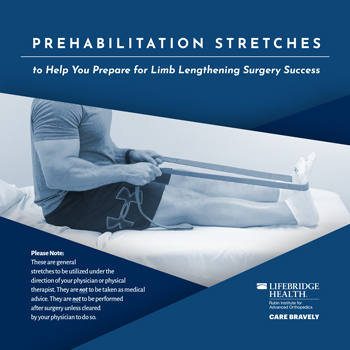 To help you prepare for limb lengthening surgery success, we take developed this brochure of prehabilitation stretches to perform in the months prior to surgery. This is not medical advice; delight consult with your doctor before kickoff whatever exercise regime.
When is limb lengthening considered?
For patients who do not want to undergo shortening or epiphysiodesis for discrepancies less than five cm (2 in), and in cases in which the discrepancy is greater than 5 cm (2 in), limb lengthening is the procedure of choice to accomplish leg length equalization. Limb lengthening is a more complex and challenging process to undergo, compared to shortening. Epiphysiodesis and shortening tin can exist combined with lengthening to decrease the corporeality of lengthening required. Patients must keep in listen that epiphysiodesis is a much more than elementary process than lengthening. Limbs are lengthened past either external fixators or internal lengthening rods.
What is a congenital limb length discrepancy?
"Congenital" means "built-in with it", every bit opposed to something that occurs late in life as a result of an blow, for example. Cases of congenital limb length discrepancy often present the most challenging and difficult lengthenings to perform and should exist treated only by experts who take significant experience with lengthening of developmental and posttraumatic limb length discrepancy. Not only is the amount of limb length discrepancy in congenital cases oftentimes big, it progressively and proportionally increases with time as the patient grows. Currently, in that location is no known way to reliably accelerate the growth charge per unit of the brusque leg. In addition to problems concerning the bone, the soft tissues in congenital cases are unusually thickened and contracted, which makes them resist the stretching required by the lengthening process. The hip, human knee, and/or ankle may also exist underdeveloped, malaligned, and/or unstable. All of these factors must be considered and addressed in lodge to avoid irreversible damage to joints, fretfulness and muscles.
The International Center for Limb Lengthening's experts accept extensive feel in reconstruction and lengthening of the congenitally curt femur and tibia. Built shortening of the femur is referred to as proximal femoral focal deficiency (PFFD) or built femoral deficiency (CFD). Congenital shortening of the tibia is ofttimes associated with partial or complete absence of the smaller adjacent fibula bone; this is chosen fibular hemimelia. Tibial hemimelia is a congenital shortening of the leg segment with which part of or the entire tibia is missing. Posteromedial bowing of the tibia is another type of congenital shortening of the tibia associated with characteristic tibial and human foot bug. Each of these types of congenital shortening requires a different approach to lengthening reconstruction surgery, and each surgery must be adapted to fit the needs and situation of the individual patient.
At the International Center for Limb Lengthening, we have successfully treated all of the above mentioned types of congenital limb length discrepancy. Many of the techniques employed were developed by our team.
How is a life treatment plan created?
Nosotros beginning by accurately predicting the amount of limb length discrepancy that will be nowadays when the child reaches the end of growth (skeletal maturity) using our Multiplier app. We identify all the deformities and joint instabilities present and then develop a personalized treatment strategy for reconstructing the limb, which may include reconstruction of the hip, knee, and/or ankle and foot equally the showtime step. Lengthening reconstruction surgery may involve one or more than operations. Most cases of congenital limb length discrepancy tin be treated with lengthening and reconstruction. In many cases, nosotros adopt to kickoff the lengthening and reconstruction surgery process before the patient reaches the historic period of 4 years, often as young as 2 years of historic period.
What are alternatives to limb lengthening?
For severe degrees of limb length discrepancy, or in situations where the patient/family is unwilling or unable to undergo the rigors of limb lengthening, other options exist. For case, amputation can be done, which allows the rest limb fit into a prosthesis. The prosthesis tin be lengthened to equalize the limb length discrepancy as the child grows. We call this prosthetic reconstruction surgery, and it includes operations such as Symes removal of the foot, removal of the leg below the knee or through the knee. For very astringent cases, rotationplasty is an pick. Although this may exist the best treatment option in the nigh severely scarce cases in which ane or more joints are missing, in our opinion, it is non the best option for the bulk of patients.
Our lengthening reconstruction surgery results for both the femur and the tibia, and even for very large limb length discrepancies, are excellent and provide excellent function later treatment with preservation and frequently comeback in joint function. Our doctors will have a very frank and open give-and-take with you lot regarding all the treatment options. In some extreme cases, we may propose against limb lengthening if nosotros feel that the end result would be inferior to that which can be achieved by amputation reconstruction surgery.
What is a developmental limb length discrepancy?
Developmental limb length discrepancy conditions are non present at nascency, merely develop during childhood. Developmental limb length discrepancies include those caused by weather such equally growth plate injury and growth arrest, Ollier illness, multiple hereditary exostoses, polio, infection, radiations, cerebral palsy, spina bifida, etc. Virtually cases tin be treated by i or two lengthenings. This limb length discrepancy group often has associated deformities. If present, these tin also exist corrected at the same time every bit the lengthening.
What is a posttraumatic limb length discrepancy?
Posttraumatic limb length discrepancy occurs afterwards a broken bone heals in a shortened position, called a malunion. Along with shortening, at that place tin can as well be athwart problems (crooked bones). Most of these cases occur in adults, and most tin be corrected with only one lengthening, and associated deformity tin exist treated at the same time. Many of these situations tin can be treated by the implantable lengthening nail method, though for many cases, the external fixator method is preferred. Our doctors will review all of the options with you and inform you about the pros and cons of each option.
Why choose the International Center for Limb Lengthening for handling for a limb length discrepancy?
Treating limb length discrepancies is a circuitous process. Your doctor at the International Heart for Limb Lengthening will accept the time to make sure y'all sympathize all of your options and and then volition customize your handling to encounter your specific needs. Our patients benefit from our team-centered approach with world-renowned surgeons and specialized physician assistants, nurses and physical therapists. Our concrete therapists are amid the most experienced in the world in managing the lengthening procedure. We help patients with limb length discrepancies accomplish their best possible result.
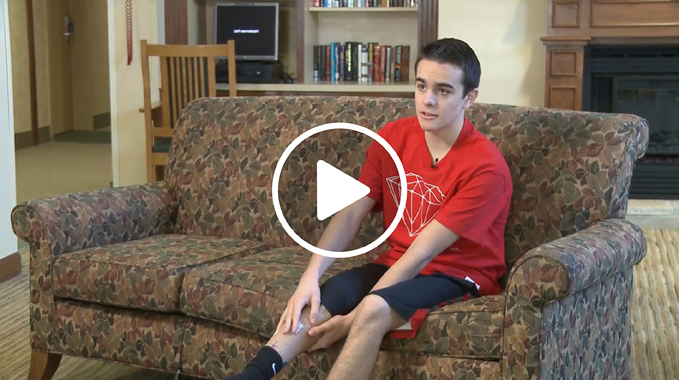
Video: Limb Length Discrepancy: Cole'south Story
Chat with a doctor about limb length discrepancies
Our doctors hold complimentary monthly chats on diverse subjects, including limb length discrepancies. Click here for more information about our monthly chats.
Click here to learn why patients choose the International Center for Limb Lengthening.
Doctors who treat limb length discrepancies
*Patients Over 16 Years Old Only
†Children and Adolescents/Young Adults Only
floreswhouthearied.blogspot.com
Source: https://www.limblength.org/conditions/limb-length-discrepancy-lld/
0 Response to "How to Know if You Have Long Limbs"
Post a Comment